
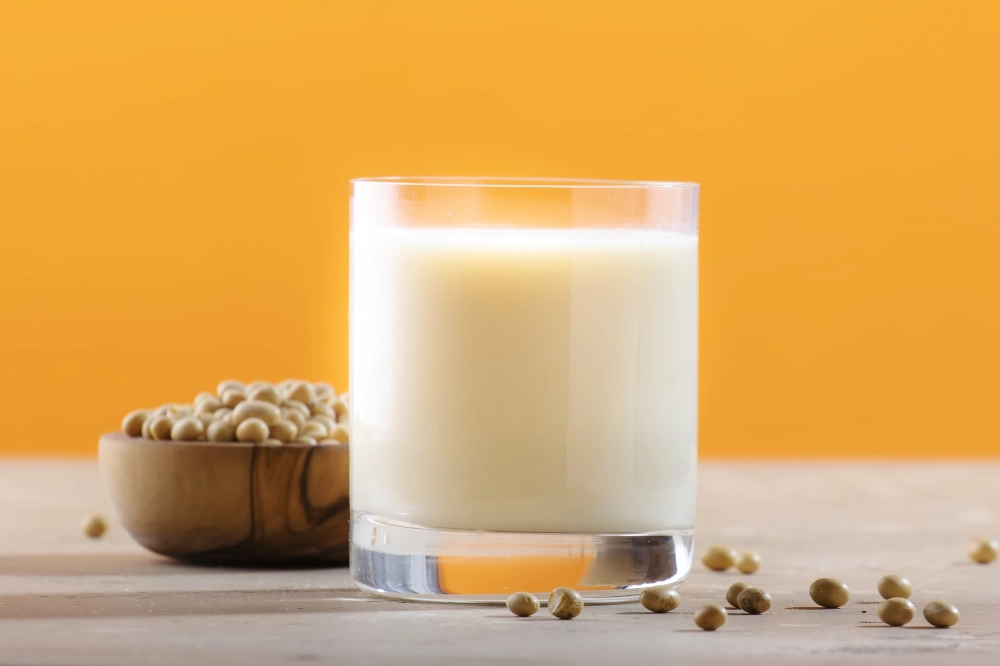
Do you know that feeling when you finally find a good soy milk at the store, then you flip the carton around and see a whole list of things? You’re not alone. The good news: soy milk is one of the easiest plant milks to make yourself, with just two ingredients. No lab-made stuff, no mystery additives. Just soybeans and water so you know exactly what goes into your glass.
Soy milk has been made for thousands of years in East Asia, from whole soybeans and water. Out of all plant milks on the shelf today, soy milk is the closest one to cow’s milk; it has real, complete protein, so it holds its own nutritionally.
It’s also easy on the stomach. Soy milk is naturally dairy-free and lactose-free, so it works well for people who feel bloated or uncomfortable after regular milk.
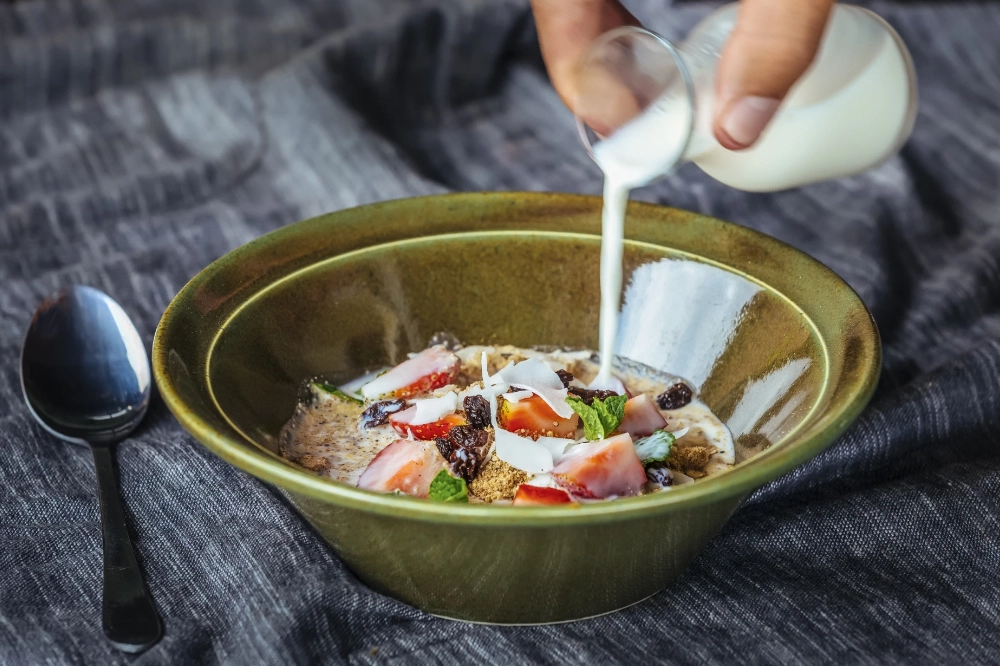
And it’s practical: soy milk works in coffee, smoothies, cereal, and baking, pretty much anywhere you’d use regular milk.
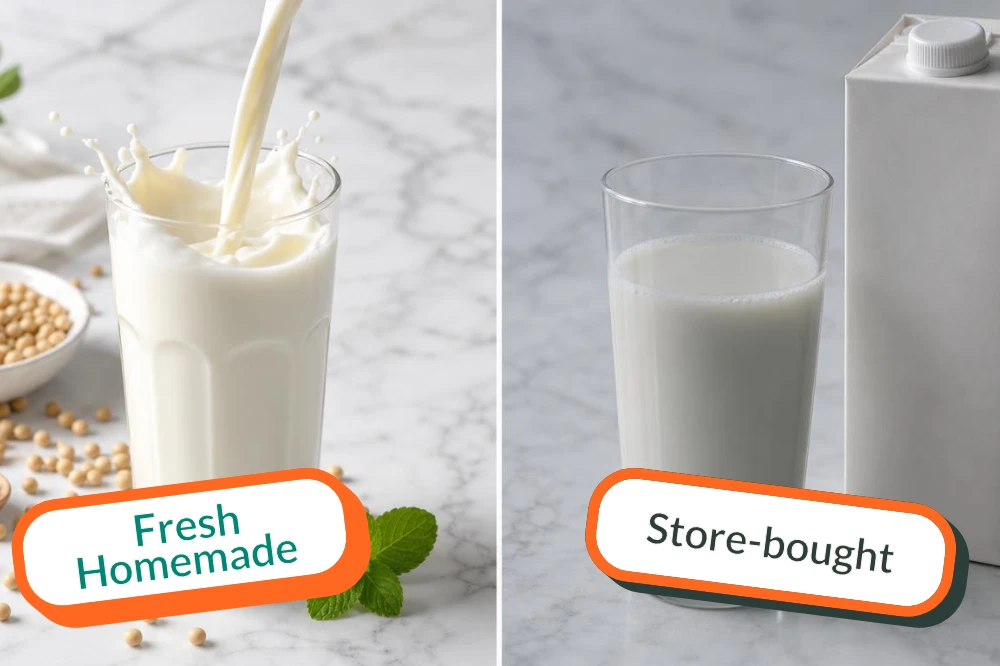
Soy milk has a naturally thick, creamy texture; that’s what makes it so good in lattes or baking. It also contains isoflavones, plant compounds that act as natural antioxidants.
But not all soy milk is the same:
One honest note: soy contains natural plant compounds that may affect thyroid function in some people, so if you have a thyroid condition, it’s worth talking to your doctor. For most people living a balanced life with enough iodine, soy milk is simply good food. And of course, if anyone in your home has a soy allergy, skip it, even in cooking.
The old way: soak the soybeans overnight, boil them (careful, soy milk foams up and spills easily), then strain everything through cheesecloth while it’s still hot. It works, but it’s messy and takes real effort.
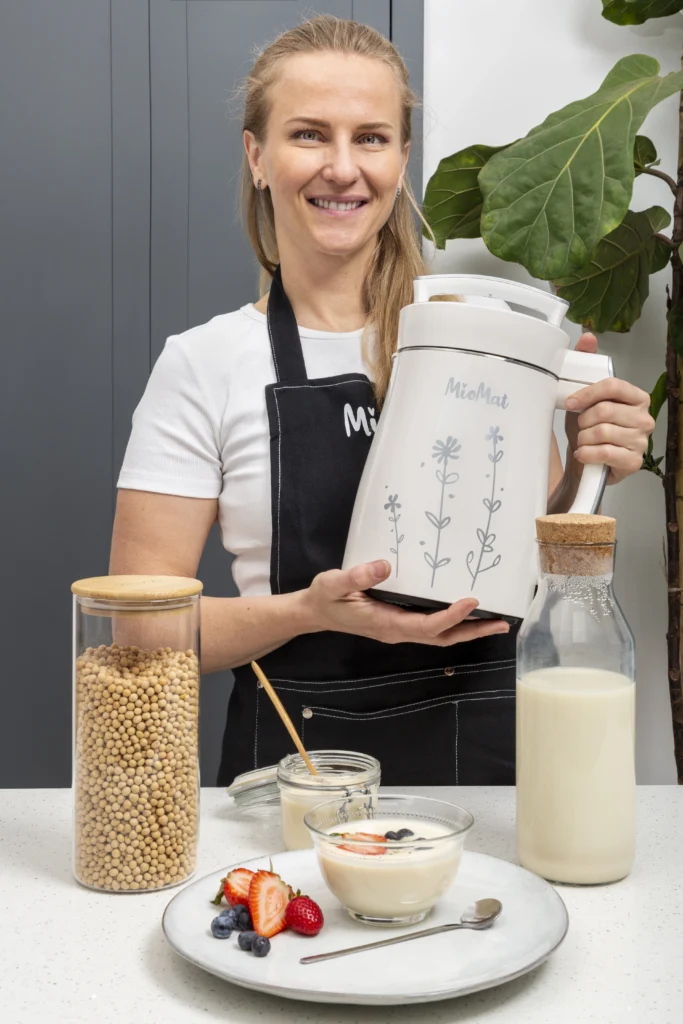
The easy way, with MioMat:
In about 20–25 minutes, you get warm, creamy soy milk, made only from what you put in. No preservatives, no shortcuts. And the jug has an automatic pre-rinse after, so cleanup is fast.
Don’t throw away the leftover pulp (okara). It’s full of fiber and protein; stir it into pancake batter, add it to soup, or bake it into crackers. Zero waste, more meals from the same batch.
You don’t need to be an expert to make real soy milk at home. You just need soybeans, water, and a little patience (or none, if MioMat does the work for you).