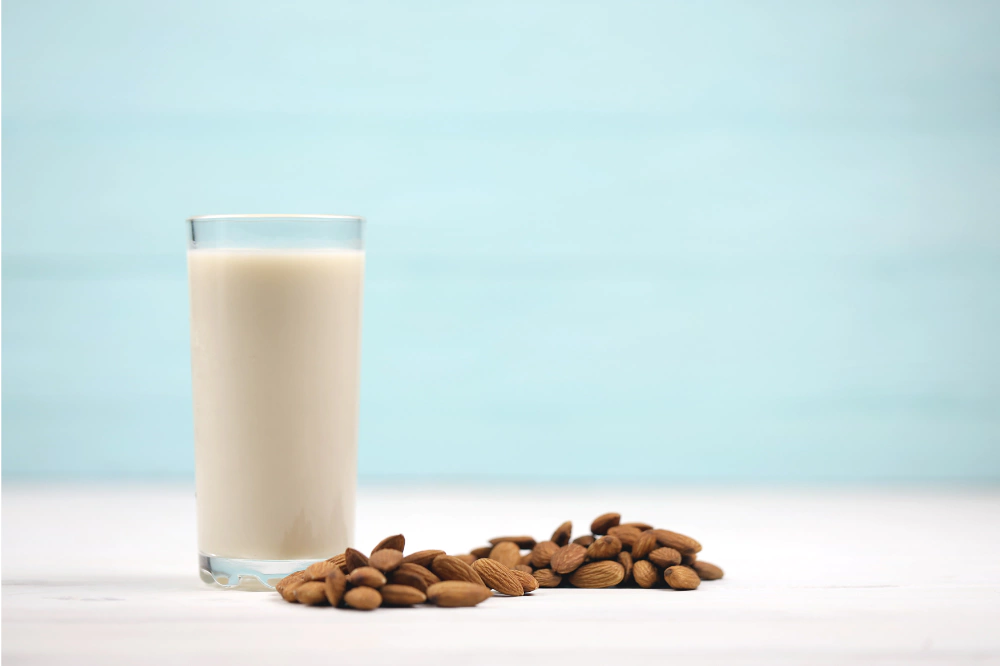

Have you ever picked up a carton of almond milk, turned it around, and wondered why something so simple needs such a long ingredient list? Depending on the brand, you may find added sugars, gums, flavorings, and other ingredients you weren’t expecting.
That’s one reason many people choose to make almond milk at home. At its simplest, all you need is almonds and water. You decide what goes in, how sweet you want it, and what you leave out.
With its mild, slightly nutty flavor and creamy texture, almond milk is also one of the easiest plant milks to use every day. It’s naturally dairy-free and lactose-free and works in everything from your morning coffee to pancakes and creamy soups.
Almond milk is incredibly versatile. Here are a few simple ways to use it:

Almond milk isn’t just easy to use. Depending on how it’s made, it can also provide a range of nutrients while offering a naturally dairy-free alternative for everyday meals and drinks.
Almond milk can provide vitamin E, healthy fats, and other nutrients while generally being relatively low in calories when unsweetened.
It’s important to remember that its exact nutritional profile depends on how it’s made. Many store-bought almond milks are fortified with nutrients such as calcium and vitamins A and D, while homemade almond milk gets its nutrients naturally from the almonds you use.
This means the nutritional values on a commercial carton won’t necessarily be the same as those in the almond milk you make at home.
Unsweetened almond milk is generally lower in calories than regular dairy milk and some other milk alternatives. For someone looking to reduce their overall calorie intake, replacing a higher-calorie drink with unsweetened almond milk can be one simple option.
That doesn’t make almond milk a weight-loss drink. What matters is the bigger picture of your diet, and calories can also vary depending on how many almonds are used and whether sugar or other sweeteners are added.
Another benefit of almond milk is that unsweetened varieties are generally low in carbohydrates.
The important word here is unsweetened. Some almond milks from the store contain added sugar, so it’s always worth turning the carton around and checking what is actually inside.
Or, you can skip the label altogether and make your own pure almond milk at home, choosing every ingredient yourself.
One of the best-known nutritional benefits of almonds is their vitamin E content. Vitamin E acts as an antioxidant, helping protect cells against oxidative stress.
How much vitamin E ends up in your glass depends on the amount of almonds used and how the milk is prepared, which is another reason homemade and commercial almond milk can have different nutritional values.
For people with lactose intolerance, almond milk offers a naturally lactose-free alternative to regular milk.
You can use it in coffee, cereal, smoothies, baking, and many of the same everyday recipes without the lactose found in dairy milk.
Almond milk is made from plants, so it is naturally dairy-free and suitable for a vegan diet.
It can be a simple alternative for people who choose not to consume dairy. However, because almonds are tree nuts, almond milk isn’t suitable for anyone with a tree nut allergy.
Almond milk can contain less phosphorus and potassium than regular dairy milk, although the exact amounts vary significantly between homemade and commercial products.
This difference can be relevant for people who need to monitor these minerals in their diet. If you have kidney disease or have been advised to limit phosphorus or potassium, however, it’s important to check the individual product and follow the advice of your healthcare professional rather than assuming all almond milks are the same.
The vitamin E naturally found in almonds doesn’t only contribute to their nutritional profile. As an antioxidant, vitamin E also helps protect skin cells from oxidative stress and supports normal skin health.
So rather than thinking of almond milk as a magic solution for your skin, think of it as one more simple way to include vitamin E-containing foods in your diet.
Almonds naturally contain mostly unsaturated fats, including monounsaturated fats. Replacing foods high in saturated fat with foods containing unsaturated fats can be part of a heart-friendly way of eating.
With homemade almond milk, you also control what else goes into the recipe — no need for added sugar unless you actually want it.

Making almond milk the traditional way usually means soaking the almonds, blending them with water, and then squeezing the mixture through a nut milk bag or cheesecloth.
It works, but there’s an easier way.
With MioMat, you can put the ingredients into one machine, select the dedicated RAW program, press start, and let MioMat do the blending for you.
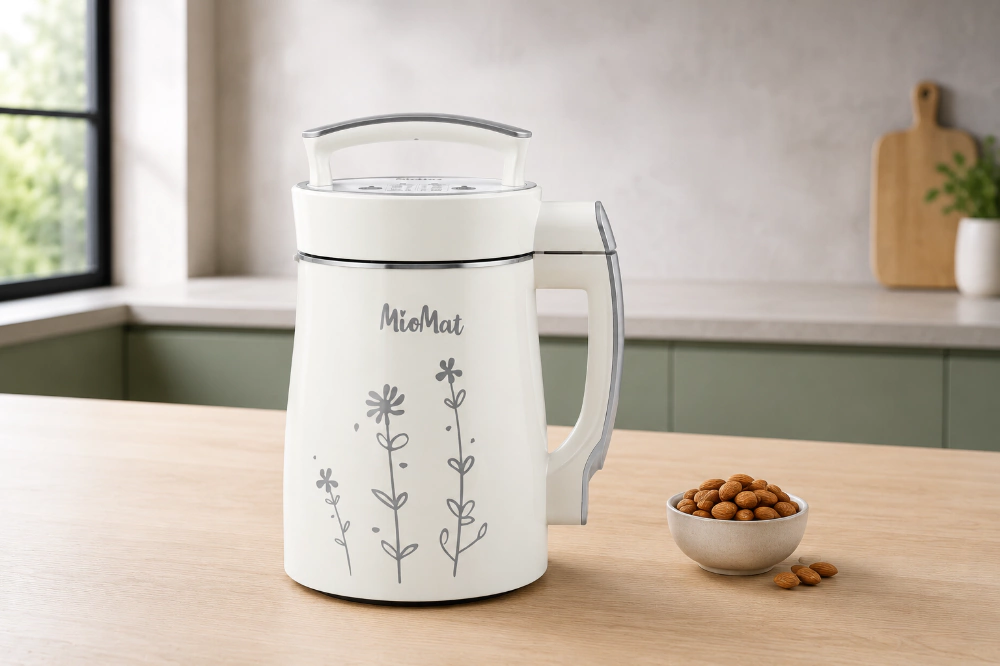
No preservatives. No unnecessary extras. Just almonds, water, and anything else you decide to add.
And don’t throw away the almond pulp. It’s full of fiber and can be added to cookies, muffins, granola, or other recipes. One batch of almonds, more than one use, and less food waste.
You don’t need a long ingredient list to enjoy creamy almond milk. With almonds, water, and MioMat, you can make it fresh at home and know exactly what goes into every glass.
Go homemade and drink the real thing.
Discover the MioMat Plant-Based Milk Maker and start making fresh almond milk at home.