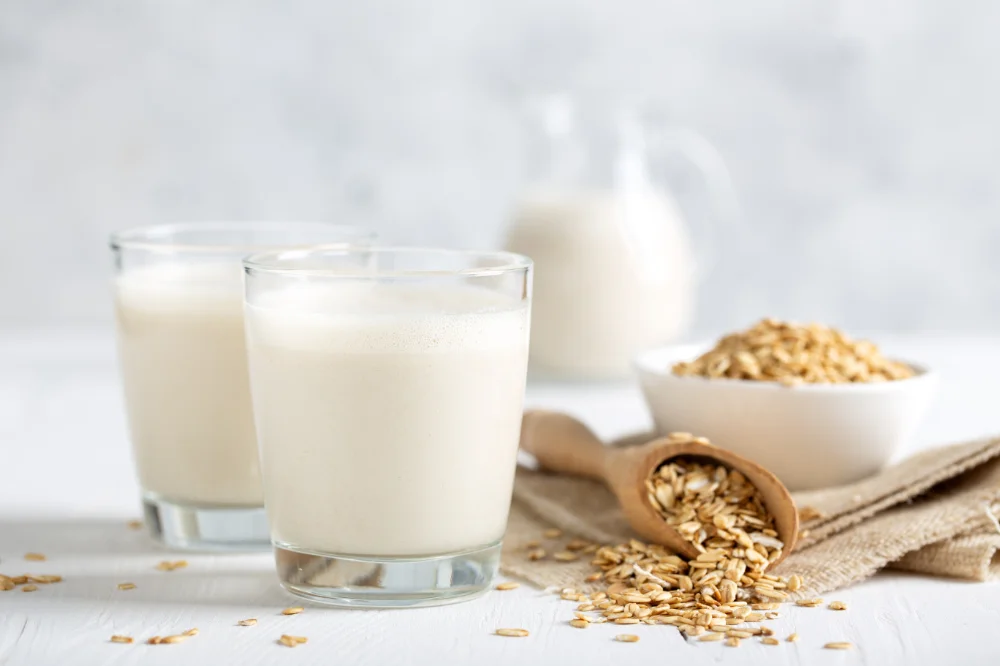
Oat milk has become a favorite for a reason. It’s creamy, mild, works beautifully in coffee, and gives people who avoid dairy another easy option.
But is oat milk good for you?
It can be. Like most foods, the answer depends on what you expect from it, what else you eat, and whether you’re pouring it from a carton or making it yourself.
Oat milk has some real advantages, but it isn’t nutritionally identical to dairy or other plant milks. Here’s what’s actually worth knowing.
Oat milk is naturally dairy-free and lactose-free, so it’s an easy alternative for people who don’t consume dairy or simply want more variety in their diet.
It also contains no cholesterol and is generally low in saturated fat.
Oats themselves contain beta-glucan, a type of soluble fiber. How much of it ends up in your glass depends on the recipe, processing method, and how much of the oat solids remain in the milk, so oat milk shouldn’t be treated as nutritionally identical to eating a bowl of whole oats.
Where oat milk really stands out is its texture. Its naturally mild, slightly sweet taste makes it easy to use in coffee, smoothies, cereal, porridge, baking, and savory recipes without overpowering everything else.
There’s an environmental consideration too. Producing oat milk generally requires less land and creates fewer greenhouse gas emissions than producing dairy milk. For people looking to reduce the environmental footprint of everyday food choices, that can be another reason to choose it.
Oat milk has plenty going for it, but that doesn’t make every version the same.
For starters, it usually contains more carbohydrates and less protein than soy milk or cow’s milk. If protein is one of the main things you expect from your milk, soy may be a better plant-based option.
It’s also worth looking at the label when you buy oat milk from the store.
Some varieties contain added sugar, oils, flavorings, or stabilizers. Even products without added sugar may contain naturally occurring sugars created when some of the oat starch is broken down during processing.
Commercial oat milk may also be fortified with calcium, vitamin D, vitamin B12, or other nutrients. Homemade oat milk isn’t fortified, so if you rely on plant milk as an important source of these nutrients, remember to consider the rest of your diet as well.
And if you need to avoid gluten, choose oats that are specifically certified gluten-free. Oats are naturally gluten-free, but they can come into contact with wheat, barley, or rye during growing and processing.
None of this makes oat milk “good” or “bad.” It simply means that knowing what’s in your glass matters more than the words on the front of the carton.
Picking up a carton is convenient. We do it too when convenience wins.
But making oat milk at home gives you something a carton can’t: complete control over the recipe.
You choose the oats. You decide how sweet it is. You decide whether you want vanilla, cinnamon, maple syrup, or nothing but oats and water.
And you can make it fresh when you need it instead of keeping another carton in the fridge.
The traditional homemade method is already fairly simple: blend oats with cold water, strain the mixture through a fine cloth or nut milk bag, then clean the blender, strainer, and everything in between.
It works.
We just prefer fewer steps.
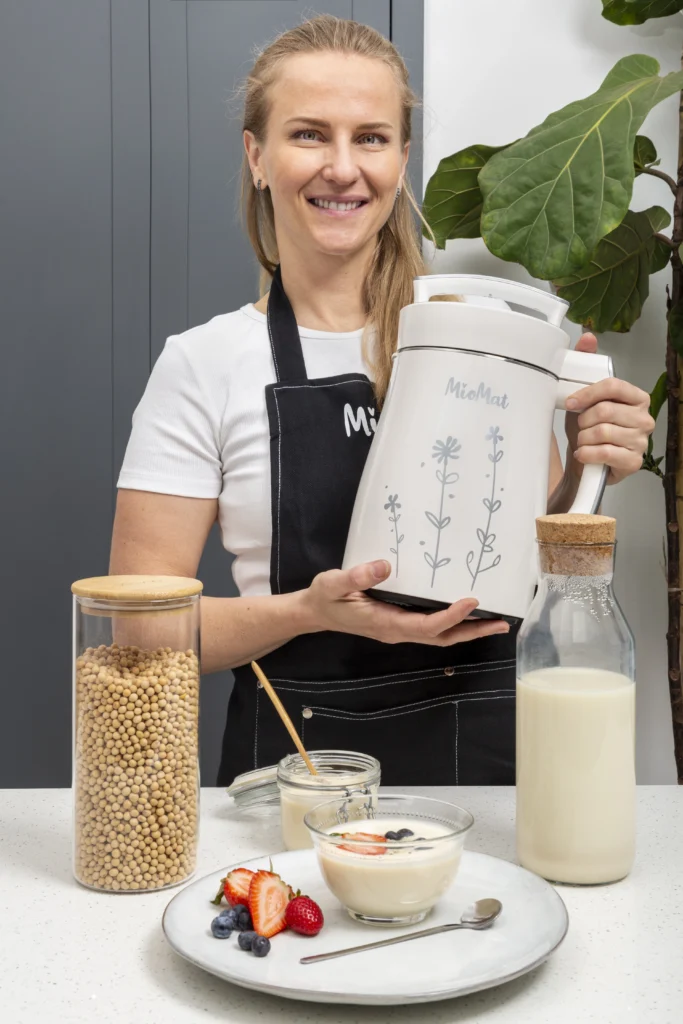
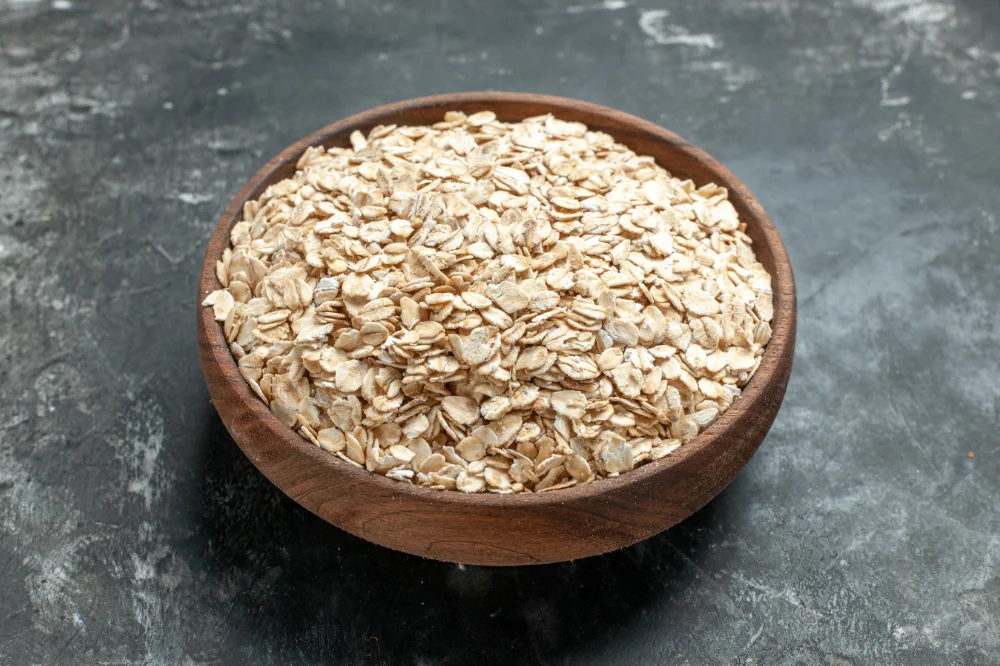
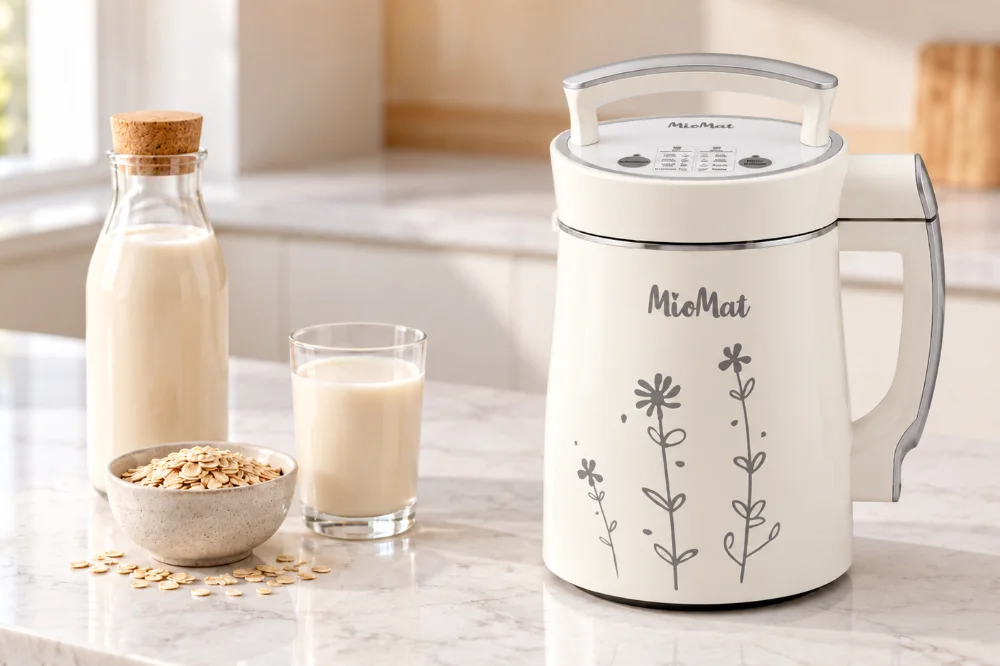
With MioMat, you can start with whole rolled oats and have fresh oat milk ready without a blender, a separate jug, or several rounds of straining and cleaning.
For a simple batch, you’ll need:
If you want to change the flavor, you can also add vanilla, maple syrup, cinnamon, or another ingredient you enjoy.
Then:
That’s it.
No soaking overnight. No transferring the milk from one appliance to another. And no need to stand in the kitchen while it’s being made.
The oat pulp left after straining doesn’t have to go to waste either. Add it to porridge, pancakes, muffins, cookies, or another recipe where a little extra oat texture works well.
Oat milk can be a great everyday choice if you enjoy the taste and it fits the way you eat.
It’s naturally dairy-free and lactose-free, low in saturated fat, versatile in the kitchen, and generally has a lower environmental footprint than dairy milk. At the same time, it contains less protein than soy or dairy milk and can be relatively high in carbohydrates.
The biggest difference comes down to what you choose.
With a carton, read the label.
At home, you write the ingredient list yourself.
And sometimes that ingredient list can be as simple as oats and water.
If you like knowing exactly what goes into your food but don’t want homemade to mean more work, discover MioMat and make fresh plant-based milk at home.